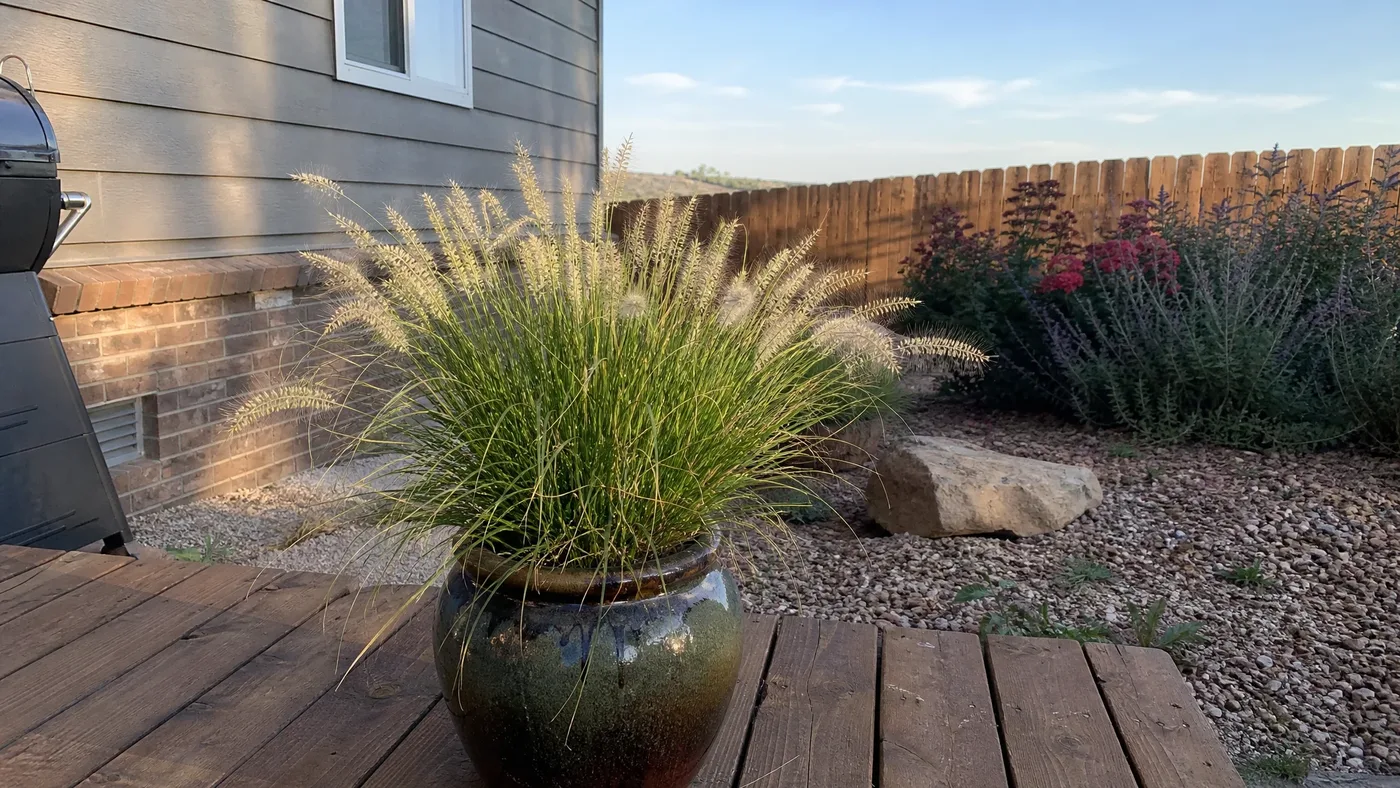
Growing Hameln Fountain Grass in Pots and Containers
Hameln fountain grass does well in a pot, and all it asks for is a big one. It grows 2 to 3 feet tall and wide, so a single plant fills a patio container without crowding it. Hameln stays at 2 to 3 feet and needs very little care, which makes it a plant-it-and-leave-it job.
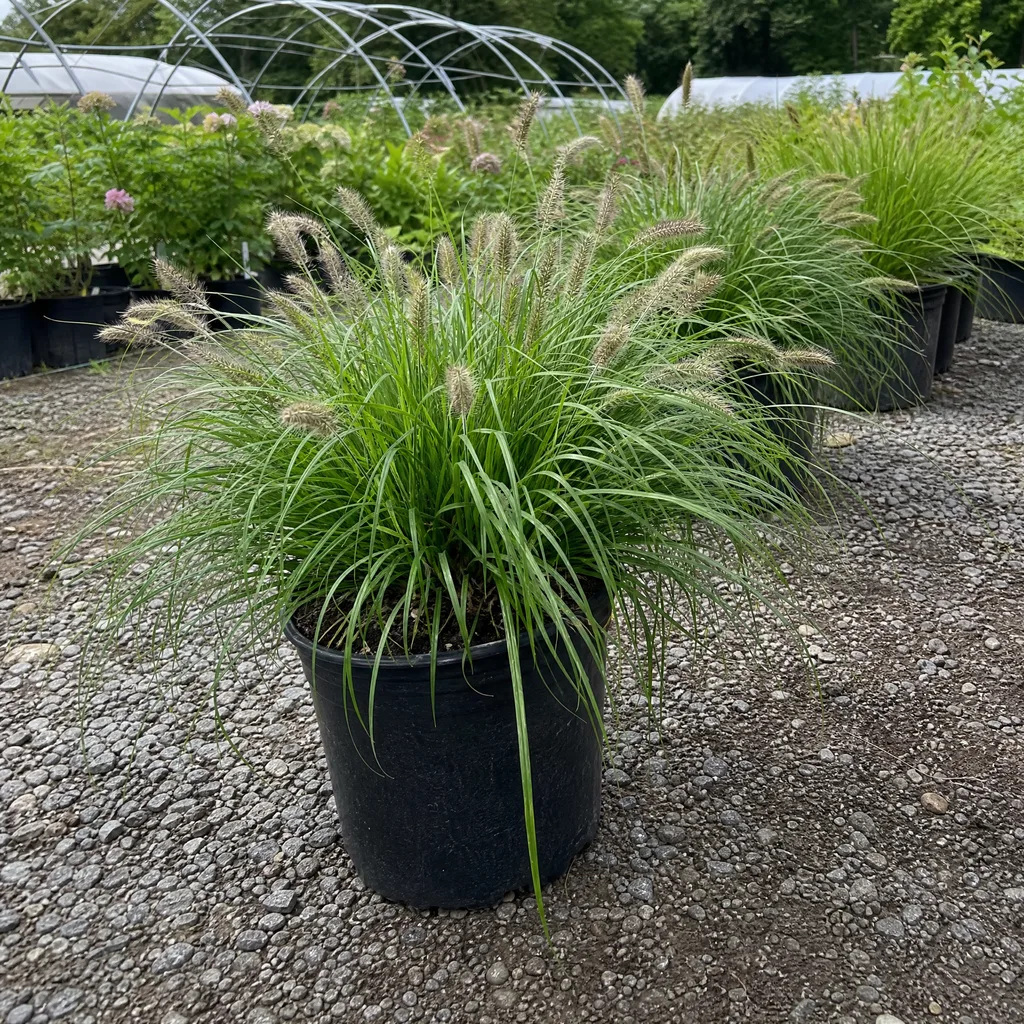
Get the pot size, sun and watering right, and you get months of arching foliage and bottlebrush plumes. Get them wrong and the clump flops, dries out or never blooms. Read on for the materials to gather, the right pot, the planting steps, watering and feeding, seasonal care and the mistakes we see most.
Why Grow Hameln Fountain Grass in Containers
Here is what we tell customers: use one plant per pot, a 5-gallon container or larger, in full sun. That suits anyone with a sunny patio, step or balcony and not much time to fuss.
Container growing Hameln fountain grass offers several advantages. The confined root space helps maintain the plant's compact, tidy form. You can place pots in full sun (the best location for the densest foliage and most prolific blooms) even if your garden has limited sunny spots.
Containers also make seasonal cleanup easier because you can groom the plant in place without worrying about debris spreading across a bed. In zones 5 through 8, container-grown plants remain long-lived perennials and typically stay vigorous for 4 to 6 years or more before needing division.
Pot Size and Materials
Buy the pot first, then gather the rest. Everything on the list is cheap and easy to find.
Materials and Tools You'll Need
This is the full kit for one pot:
- Container with drainage holes (see sizing guidance below)
- Peat moss, coconut coir, or compost (for the soil mix base)
- Perlite or coarse sand (for drainage amendment)
- A small amount of balanced fertilizer (10-10-10 or similar)
- Watering can or hose with a gentle spray nozzle
- Hand trowel or spoon
- Landscape fabric or newspaper (optional, for lining the pot bottom)
Choosing the Right Container Size
Go big. Hameln ends up 2 to 3 feet wide, and a tight pot only dries out faster. Customers often ask us if a snug pot keeps the grass smaller. In our rows it just gives a dry, floppy clump.
Container size matters significantly for hameln fountain grass pot success. A minimum container width of 18 to 20 inches accommodates a mature plant without restricting roots. Depth should be at least 12 to 14 inches to allow the root ball room to expand.
A good starting point is a 5-gallon or larger pot, though even a 10-gallon or #3 nursery container works well if you plan to keep the same plant for several years. Wide, shallow pots (like decorative planters) work better than tall, narrow ones because fountain grass has a spreading growth habit, not a deep taproot.
When you first plant a quart-size or small container-grown specimen, you may repot it into a 3-gallon or 5-gallon container for the first year, then move it to a larger pot as the clump expands. Always choose pots with drainage holes to prevent waterlogging. Terra cotta and ceramic pots both work. Ceramic tends to dry slower in hot weather, while terra cotta drains faster and is ideal in humid climates.
Planting Hameln Fountain Grass Step by Step
Plant in spring after the last frost, or in early fall. The whole job takes about 15 minutes, and these six steps cover it.
- Prepare the soil mix. Hameln Fountain Grass adapts to most well-drained soils, so you can build a simple potting mix by combining equal parts peat moss or coconut coir, perlite, and compost. This balance retains moisture until the plant is established while allowing excess water to drain freely. Aim for slightly acidic to neutral soil, roughly pH 6.0 to 7.5.
- Fill the container. Add soil mix to the pot until it reaches about two-thirds full. Gently firm it with your hand but do not compress it hard, as roots need air spaces to grow.
- Position the plant. Remove your grass from its nursery container and gently loosen the root ball with your fingers. Set it in the pot so the top of the root ball sits at the same level as the soil surface (not buried deeper). The crown of the plant should remain above the soil line to prevent rot.
- Fill around the plant. Add soil mix around the sides of the root ball until the pot is full and level. Lightly firm the soil so the plant sits snugly without air pockets, but avoid packing it tightly.
- Water thoroughly. Water the container until water drains from the bottom. This settles the soil and removes air pockets. Let it drain fully before placing the pot in its final location.
- Apply a light fertilizer dose. If your potting mix does not include fertilizer, apply a balanced fertilizer (such as 10-10-10) at half the label rate. Hameln Fountain Grass is a light feeder, and container soil has limited nutrient reserves, so a single spring application is usually sufficient for the growing season.
Leave an inch or two between the soil and the pot rim so water soaks in instead of running off. Skip the layer of gravel or broken pot that is often recommended for the bottom of a pot. We don't use it, because it raises the soggy zone closer to the roots instead of draining it. Fill with mix right down to the drainage holes.
Treat the pH range above as a target, not something to test for. Hameln tolerates acidic and alkaline soils. For more on mixes, see our guide to the best soil for Hameln fountain grass and how to improve drainage.
Watering and Feeding Container-Grown Hameln
Pots dry out faster than beds, so water is the one thing to watch. Feeding is easy because it happens once a year. For a deeper look at water needs, see watering Hameln from new planting to mature clump.
Water your hameln fountain grass in containers regularly after planting until it is established, which typically takes 4 to 6 weeks. Water when the top inch of soil feels dry to the touch. Once established, the plant has moderate drought tolerance, so you can reduce watering frequency in mild weather. During hot spells or on windy patios where pots dry quickly, check soil moisture every few days.
Containers lose water faster than in-ground beds, especially in full sun or in terra cotta pots, so daily watering may be necessary in peak summer. Feel the soil before watering, because overwatering in cool or cloudy weather causes root problems. In fall and winter, reduce watering as growth slows.
Fertilize once each spring as new growth emerges. Use a balanced fertilizer and apply it at half strength to avoid overfertilizing, which encourages soft, floppy growth. Skip fertilizer for the rest of the season. Container plants confined to pots benefit more from a single spring boost than repeated feeding.
You will often read that potted grasses need monthly liquid feeding. We don't follow that advice with Hameln. Extra nitrogen only makes long, soft leaves that fall open.
Seasonal Care and What to Expect from Potted Hameln
Hameln needs very little through the year. Here is when to do each job, and how the plant develops over the first few seasons.
Sun, Bloom and Cutting Back
Sun and a single haircut in late winter are the two jobs that matter. Everything else is waiting and watching.
In spring after the last frost, place your pot in full sun for the best bloom and most compact habit. The plant reaches mature clump size in about 2 to 3 growing seasons. Hameln blooms earlier than the species, with purple-tinged bottlebrush plumes from late summer into fall. The plumes age to buff or tan, attract birds and add winter interest when left standing.
In late winter or early spring before new growth emerges, cut the foliage back to 3 to 4 inches above ground. Do not cut back in fall, as the dried stems and plumes provide winter texture and shelter for beneficial insects. Roots in a pot freeze harder than roots in a bed, so in the colder end of zones 5 through 8, move the pot against a house wall or shelter it from severe wind. Our guide on when and how to cut back Hameln fountain grass has the details.
Year-by-Year Timeline
Here is what a potted plant does from the first summer onward.
A quart-size potted Hameln blooms in its first year from spring planting, though flowers may be fewer than on a mature clump. By year 2 to 3, the plant reaches its full size of 2 to 3 feet tall and wide. In autumn the foliage turns from medium green to golden tan and russet or copper tones, providing multi-season color. Birds visit the winter seed heads. Unlike the species, this cultivar does not re-seed itself, so you won't find seedlings in neighboring pots.
After several years of vigorous growth, the center of the clump may begin to thin, which is normal for long-lived perennials. At that point, you can divide the plant or simply replace it with a fresh specimen. What we tell customers is to enjoy it for a few seasons, then refresh it when vigor declines.
Common Container Mistakes to Avoid
Four mistakes cause nearly every sad pot of Hameln we hear about, and all four are easy to avoid.
Using a pot that is too small is the most frequent error. Undersized containers dry out rapidly and restrict root growth, stunting the plant and causing it to flop or split open. Invest in a container at least 18 to 20 inches wide and 12 to 14 inches deep.
Overwatering is the second common problem. In containers, waterlogged soil can kill roots faster than in-ground beds. Always ensure the pot has drainage holes and let the soil dry slightly between waterings. If you use a decorative pot without drainage, set a draining pot inside it rather than planting directly in it.
Placing the pot in too much shade results in sparse blooms, weaker growth, and a tendency toward flopping. Full sun yields the most compact, floriferous plants. Light shade is tolerable but not ideal for container specimens.
Overfertilizing, even with the best intentions, encourages rank growth and weak, spreading stems. Stick to one balanced fertilizer application each spring at half strength.
Reaching for the spray bottle is not on the list. Hameln has no major pest or disease concerns, so leave the sprays on the shelf.
Quick Reference Checklist
For more in-depth care techniques, see the complete growing guide for hameln fountain grass.
This table sums up the whole year in one place.
| Task | Timing | Notes |
|---|---|---|
| Plant in pot | Spring after last frost, or early fall | Use 5-gallon minimum, 18-20 inches wide and 12-14 inches deep |
| Water regularly | Until established (4-6 weeks), then as needed | Let top inch of soil dry between waterings |
| Fertilize | Once in spring as new growth starts | Balanced fertilizer at half strength |
| Position pot | Year-round | Full sun for best blooms and compact form |
| Expect blooms | Late summer through fall | Purple-tinged to tan plumes, aging buff |
| Cut back | Late winter/early spring | Cut to 3-4 inches above ground and leave standing in fall |
| Divide (optional) | Early spring | After several years if center thins |
Plant Hameln Once and Let It Run
Give Hameln a big pot with drainage holes, a spot in full sun and water whenever the top inch of soil is dry. Feed it once in spring, cut it back in late winter, and leave it standing through fall. That is the whole routine.
Hameln Fountain Grass
Nursery-grown Hameln Fountain Grass in sizes from Quart Plant, shipped to your door.
From $49.49
Shop Now →Before a plant leaves us, we check that the roots are white and filling the pot, the crown is firm and the foliage is clean, so your Hameln is ready for its container the day it arrives. We are growers with our own farms, and we grow and sell top-quality ornamental grasses and perennials.